A Cozy Story About the Power of Found Family
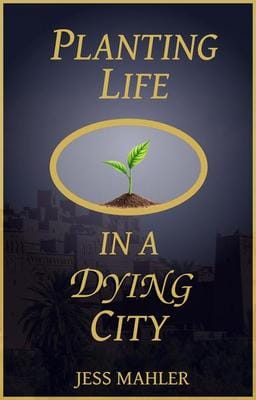
Planting Life in a Dying City starts with tragedy but resonates with hope and empowerment.
Events kick off with young Lefeng coming home late one evening to find a tsunami has demolished eir entire village. Ey quickly unites with an orphan barely old enough to be have been allowed outside of eir family’s compound and another teen. The three then journey to a strange city in hopes of building a life together. Once there, they collect other misfits and fight against societal prejudice to construct a vibrant new family.
Read This Book If You...
1. Enjoy agender representation.
2. Applaud queer-normative settings.
3. Appreciate found-family narratives.
4. Like seeing non-neurotypical characters.
5. Like seeing chronically ill / disabled characters.
6. Approve of healthy forms of polyamory.
7. Are intrigued by societies that feel like main characters.
8. Wish to support independent LGBTQ+ fiction.
Family Values
Family is important in the setting of Planting Life in a Dying City. Arguably too important. To not belong to a legally recognized family is seen as a mark of unworthiness in this land, something that inspires prejudice and condones mistreatment against you. The ‘Familyless’ face limitations on where they can live, what jobs they can do, and even how they can speak of themselves. In this culture, people hold their personal names closely, introducing themselves by things like ‘An Adult of the Skiing Family’ rather than by name. But those without families are forced to give out their personal names, something that reminds them of their shame every time they are addressed.
There are many familyless individuals living in the unnamed city Lefeng finds emself in, many of whom are living in ‘psuedo-families’. Those units bring them support and happiness, but aren’t legally recognized as families. This denies their members a variety of rights, including representation in the governing body that could easily provide a path to official recognition if it saw fit.
One of the main conflicts for Lefeng’s fledgling family group is gaining legal recognition as a family, a path that involves not only assembling compatible individuals but building a new home from scratch and coming up with a craft that isn’t already represented in the city.
What Is Family?
To qualify as a family in the book’s culture, a unit needs to represent at least three generations. Children, Parents, and Grandparents. There can be a lot of all of these things. Rather than thinking in terms of pairs of parents, the entire parental generation acts as parents who all support the children by providing food, clothing, and shelter while the majority of the day-to-day child rearing is done by the grandparents. One assumes that sometimes two members of a generation group will be closer to each other than the others, but they’re all considered spouses.
It’s an interesting setup, for sure.
On one hand, the part of me that was left alone with a baby in the south-eastern US while my partner was deployed to the Middle East, my parents were living in Europe, my parents-in-law were living in Asia, and my sibling was in California could only fantasize about having a fraction of the support this structure would have provided. On the other hand, I feel nothing but relief my toxic grandparents didn’t have any more influence on my life than they did.
Of all the characters portrayed, I related the most to the one who was driven from eir family by their ableism and lack of understanding. Which is probably why I see the societal structure as something I’d be traumatized by. It is important though that ey finds emself in a loving and supportive new family by the conclusion of the book, which I think gives hope to those who, like me, would prefer not to let the voices of their birth family elders continue to poison their psyches.
So Queernormative!
The lack of gender in this novel is perhaps a tad confusing for many in our society. The only arguably gendered word I found in the entire book was a word that appears to mean ‘person who physically gave birth to me’. And I’m not actually certain I translated that correctly and it isn’t closer to ‘parent who is most connected to me’.
I found it fascinating how often I, an agender person, found myself looking for gendering hints in the text. And there were a few, such as a person with breasts or a beard. (Although obviously neither of those are conclusive gender markers.) Nevertheless, I ended the book not entirely certain how all the members of the lead family would be gendered here. And I really enjoyed that ambiguity.
One side effect of the genderless presentation is that it becomes challenging to attempt to assign words like ‘gay’ or ‘straight’ to anyone. If the local language has words for that, we don’t see them in the text. I imagine locals look at it more like they’re attracted to a certain chest shape or that they don’t enjoy being poked by penises very much. In other words, they’d see personal preferences for physical traits and activities rather than preferences for certain types of people.
Content Summaries
Cozy/Intense Scale: (5 is OMG! INTENSE! And 1 is So Cozy You Might Fall Asleep)
2 with occasional jumps to 3
Spice Level: (0-5)
0-1. There are subtle romantic arcs, but not much to see in terms of physical expressions of affection. The growing closeness is indicated more by supportive actions and concerns.
Representation:
While everyone being agender makes it hard to say which sexuality labels might apply to the characters here, they mostly came across to me as panromantic if not pansexual.
The entire culture embraces polyamory, although it is established that some groups of familyless consist of only two people.
Additionally, one family character has a chronic illness I never quite settled on a label for beyond it being something that involves intense chronic pain and low stamina, another is clearly Autistic and fluent in a hand-signed language, and Lefeng emself certainly comes across as ADHD.
The author, Jess Mahler, uses they/them pronouns on Mastodon, where they describe themself as queer, disabled, neurodivergent, and Jewish. And I deduce from their nonfiction work about healthy polyamory that they’re probably polyam as well.
Advisories:
The book starts with a natural disaster that kills the initial three characters’ entire birth families. They deal with grief and mourning, although I don’t consider either to be a primary focus of their tale.
The chronically ill character has been rejected from eir family due to eir illness, an arc which not only includes their ableism but the character’s resulting internalized ableism. Ey is verbally attacked by them during the novel, although ey is quickly defended by eir new family.
There is a scene where the Autistic character is physically attacked over Autistic behavior. Eir potential spouse rushes to defend em and both their prospective family and their birth one are highly supportive in the wake of it.
The prejudice against the family-less reads as classism.
Sold?
You can learn more about Jess Mahler and their work on their website.
Or simply click this Books-2-Read link to purchase this book.
Comments